IRS Notice, Letter and Summons Response in Arizona
An IRS letter is easier to handle when you know what it is and when it is due. Southwest Tax Law reads your notice, tells you what it means and responds for you, including to a summons.
To respond to an IRS notice, find the notice number in the corner, read what it says you owe or must send, note the response date, and answer in writing or by phone before that date. Never ignore a notice, because later ones carry shorter deadlines and stronger collection action.
Most letters from the IRS are routine. Some are not. A few ask for money, some propose to change your return, and a handful warn that the IRS will levy or has already filed a lien. The difference is not always clear from the wording, so we help our Arizona clients sort them out first. This page walks through the main types, what each one means and what to do. It is general information, and your own letter always controls.
How do I read an IRS notice?
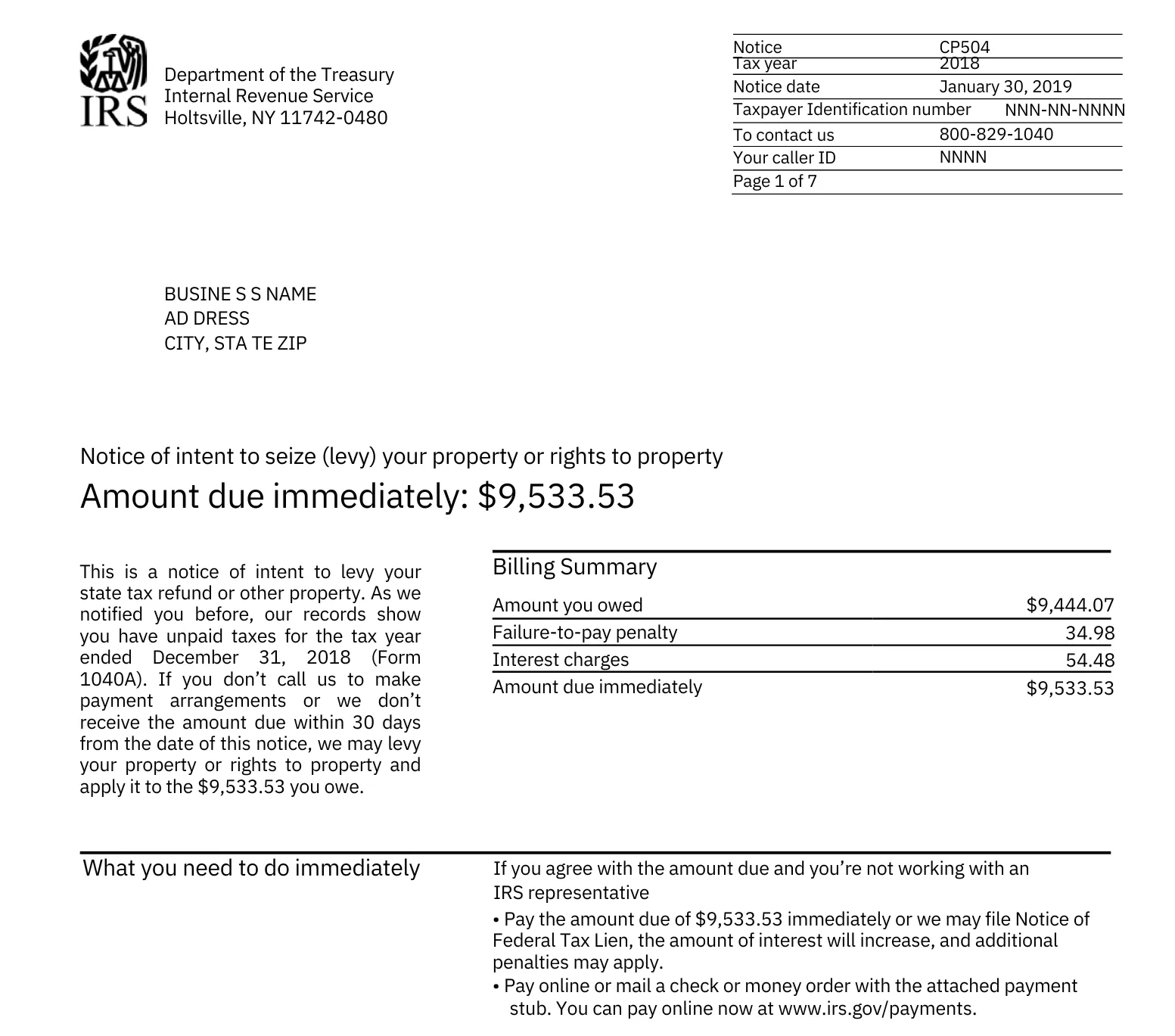
Start at the top right. Most notices carry a code such as CP14, CP504 or LT11, along with the tax year, the date and the IRS phone number. The IRS maintains a page on understanding your IRS notice or letter and a tax topic on notices, bills, penalties and interest. Check that the name, taxpayer identification number and tax year match yours, then read the amount due and the response date. The IRS says to reply promptly, and if you agree, to follow the instructions to pay. If you disagree, you usually have to respond in writing with documents that support your position.
Key facts
- The notice number and date tell you where you are in the process.
- A balance due notice is not the same as a levy notice, but it leads to one if ignored.
- Written replies should be sent by a method that gives you proof of delivery.
- Keep every page of the notice and the envelope.
What do the common collection notices mean?
A first balance due notice, such as a CP14, says the IRS believes you owe tax. A later CP504, shown in the sample image above, is a notice of intent to levy certain property, such as a state tax refund, and the sample says the IRS may levy or file a lien if you do not respond. The Final Notice of Intent to Levy, Letter 1058 or LT11, is different, because it carries the right to a hearing, which we explain on our page about IRS Appeals and Collection Due Process hearings. A lien notice, Letter 3172, has similar hearing rights.
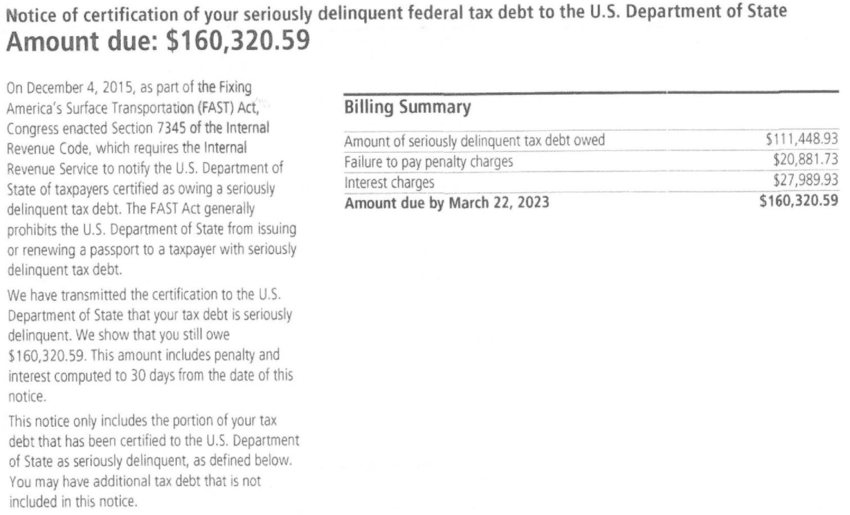
The IRS may also certify a seriously delinquent tax debt to the State Department. The second sample image shows that kind of notice. It explains that Congress enacted section 7345 of the Internal Revenue Code to require the IRS to notify the State Department, and that this can generally prevent a passport from being issued or renewed. If you receive one, do not wait. We review what is certified and what can be done.
What if the notice says the IRS changed my return?
Notices that propose changes to income, deductions or credits can come from automated matching or from an audit. They usually give you a limited time to agree or disagree. If you agree, you pay or sign. If you disagree, you send documents. A notice of deficiency has a 90 day period to petition the Tax Court, and the court cannot extend that period, so the date is serious. We also check whether the IRS counted your income correctly, because mismatches with third party forms are common.
How should I respond to an IRS summons?
A summons is a legal demand, not a routine letter. Under section 7602 of the Internal Revenue Code, the IRS may summon a person to appear, give testimony or produce records for an examination or a collection inquiry. A summons may also be served on a third party such as a bank. Do not ignore one. The date and place are stated on the document, and the IRS can ask a court to enforce it.
We separate the issues. We confirm who issued the summons and why, what records are demanded, and whether the request is reasonable. We then arrange the response, which may include producing documents, scheduling an interview with our involvement or, in rare cases, challenging the summons. If a summons arrives together with a mention of fraud or an agent from Criminal Investigation, stop and speak with an attorney first, and read our page on criminal tax defense. Your rights as a taxpayer are summarized in IRS Publication 1, Your Rights as a Taxpayer.
When a revenue officer sends the letter
If the letter comes from a named revenue officer with a direct phone number, the case has moved to field collection, and it deserves immediate attention. Revenue officers can ask for financial statements, request records and visit places of business. Our page on revenue officer and collections defense explains what to expect and how we step in so you do not have to deal with the officer alone.
What should I send back?
That depends on the notice, but the pattern is consistent.
- Confirm the notice is real. The IRS says it does not usually start contact by email or text, and scams are common.
- Pull your IRS account transcript to see what the IRS has on record.
- Compare the notice to your return and your records.
- Decide whether to pay, dispute, request a payment plan or ask for penalty relief.
- Send a clear response with copies, not originals, and keep proof of delivery.
- Follow up. Letters sometimes cross in the mail.
If you cannot pay in full, there are options on our installment agreement and offer in compromise pages. If a levy has landed, see bank levy release or wage garnishment release. If penalties dominate the bill, penalty abatement may help. Our tax debt relief overview puts those choices side by side.
What does Southwest Tax Law do with a notice?
We read the letter, check it against your transcripts and tell you what it means in plain terms. We prepare the response, file a power of attorney so the IRS contacts us, and calendar every date. Where a notice affects more than one year or more than one tax, we look at the whole account, not one letter at a time. We serve clients across Arizona by phone and secure portal, including those in Marana and Sahuarita, and we do not promise an outcome. You will not have to guess what a letter means. You can also browse common IRS problems or request a callback to send us your notice.
Common mistakes with IRS letters
A few errors come up again and again. People set a letter aside because it looks like the one before. They call the IRS number and wait on hold past the deadline, when a short written reply would have protected them. They send original documents instead of copies. They pay a bill they do not owe because the amount looked small, or they ignore a bill that really is correct and let interest grow. And they respond to a scammer posing as the IRS. The agency says it generally mails notices rather than starting contact by phone, email or text, so an urgent call demanding gift cards or a wire is a red flag. If you are not sure whether a letter is real, call us or use the contact information on the official IRS site, not the number on the letter you received.
Frequently asked questions
What should I do first when I get an IRS letter?
Read the notice number, the amount, the tax year and the response date. Compare it to your records and respond before the date. If you do not understand it, call us before replying.
Is a CP504 notice a final warning?
No. A CP504 is a notice of intent to levy certain property, but the Final Notice of Intent to Levy with hearing rights comes later. Both deserve a fast response.
What is an IRS summons?
A summons is a legal demand to appear, testify or produce records. The IRS can ask a court to enforce it, so do not ignore one. Speak with an attorney before responding, especially if criminal issues are possible.
Can I answer an IRS notice myself?
Yes, but the wording of your reply can affect your rights. Many people call us after a reply was missed or incomplete, so we suggest a quick review first.
What if I cannot pay what the notice says?
You may qualify for a payment plan, a settlement or hardship status. We review your numbers and tell you which option fits.
How long do I have to respond?
The deadline is printed on the notice and varies by type. A notice of deficiency, for example, gives 90 days to petition the Tax Court, and that cannot be extended.
Ready to resolve this? As the tax attorney team Tucson and Arizona trust, we offer a free consultation with a resolution specialist, available by phone Monday through Friday. Request a callback or call (520) 900-1422.
This page is for general information and is not legal advice. Every tax matter is different, outcomes depend on the facts, and nothing here guarantees a result. Contacting Southwest Tax Law does not create an attorney-client relationship.
Other Ways We Can Help
Visit Southwest Tax Law
Get your free tax debt action plan.
15 minutes with our resolution team. A concrete plan, yours to keep. No obligation, no pressure.